In the morning, the line of the day
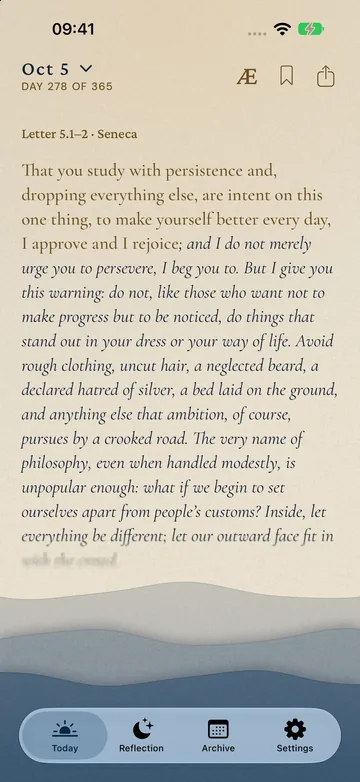
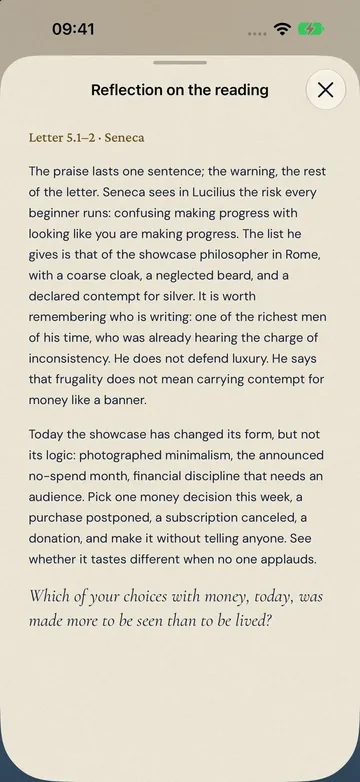
A notification brings one line, and the app shows the whole passage it comes from, with the line highlighted and a short reflection that ties it to work, money, relationships or health
Stoic journal for iPhone, iPad and Android
One passage a day, and a few minutes to think about it
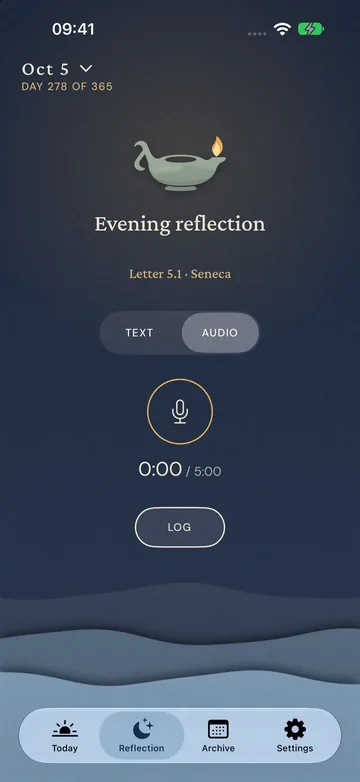
Marcus Aurelius, Epictetus and Seneca each morning, the original Greek or Latin a tap away and, in the evening, a quiet place to write or record what the day taught you
App StoreGoogle PlayComing soon to the App Store and Google Play
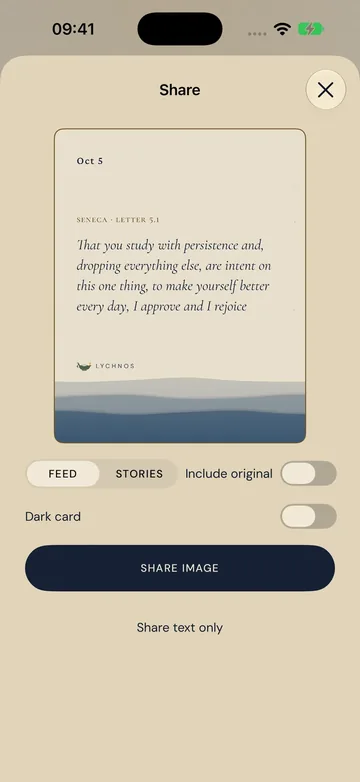
Do this, my dear Lucilius: claim yourself back for yourself, and gather and keep the time that until now was being taken from you, or stolen, or was simply slipping away.
Latin original
Ita fac, mi Lucili; vindica te tibi, et tempus, quod adhuc aut auferebatur aut subripiebatur aut excidebat, collige et serva.
Greek original · Marcus Aurelius · Book 5, §1
Ὄρθρου, ὅταν δυσόκνως ἐξεγείρῃ, πρόχειρον ἔστω ὅτι ἐπὶ ἀνθρώπου ἔργον ἐγείρομαι
In the morning when thou risest unwillingly, let this thought be present,—I am rising to the work of a human being.
Lychnos (λύχνος) is the Greek clay oil lamp: Seneca reviewed his day once the light was out, and Epictetus, after his iron lamp was stolen, made do with one of clay
A notification brings one line, and the app shows the whole passage it comes from, with the line highlighted and a short reflection that ties it to work, money, relationships or health
Seneca's three questions, what went well, where you slipped, what to do better tomorrow, in writing or out loud, kept encrypted on your device
Every passage in Greek or Latin, from the critical editions, behind the Æ button
Time, what is up to us, judgments, the passions and more, one theme a month
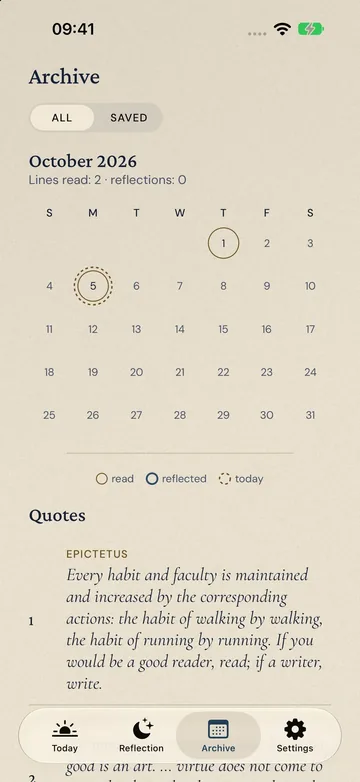
The days you read and reflected on, your saved lines and what you wrote a year ago
The line of the day and your last seven days on the home screen
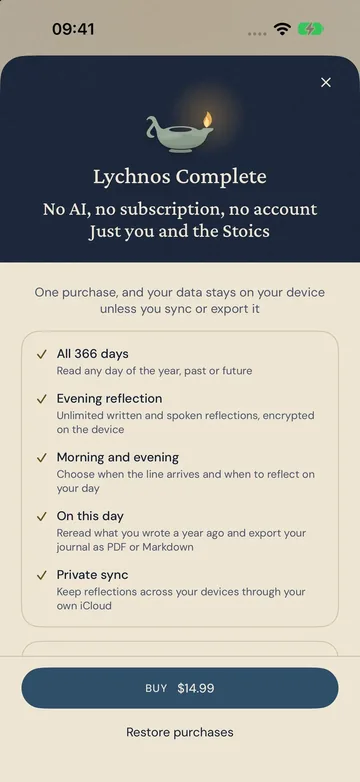
Your reflections on all your devices through your own iCloud or Google Drive, encrypted before they leave the device
Your journal as PDF or Markdown, and any line as an image for the feed or stories
Lychnos does not write, summarize or answer your reflections, and nothing you write is read by a model: the thinking is yours
One-time purchase, no subscription
The price appears in the App Store and Google Play, in your currency
No, each day comes with a short reflection that explains the context and brings the passage to today's life
English uses the public-domain translations by George Long and Aubrey Stewart, and our own translation from the Latin for Seneca's letters; Portuguese and Spanish are our own translations from the Greek and Latin
No, Lychnos is a philosophy journal and does not replace medical or psychological advice; if you need emotional support, reach out to a health or support service in your country
English, Brazilian Portuguese and Latin American Spanish, following your device's language
Soon, on the App Store for iPhone and iPad and on Google Play for Android, in the countries of the Americas